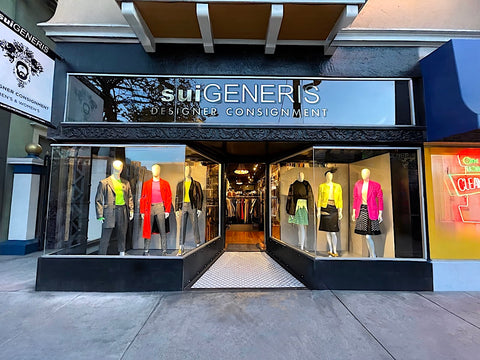
Rei Kawakubo began manufacturing and selling womenswear under Comme des Garçons in 1969; the company was established in 1973 and menswear followed in 1978. The house contains many distinct labels—Comme des Garçons, Homme Plus, Homme, SHIRT, PLAY and others—so authentication starts with correctly identifying the sublabel.
Rei Kawakubo began manufacturing and selling womenswear under Comme des Garçons in 1969; the company was established in 1973 and menswear followed in 1978. The house contains many distinct labels—Comme des Garçons, Homme Plus, Homme, SHIRT, PLAY and others—so authentication starts with correctly identifying the sublabel.
Key anchors include 1969 brand start, 1973 company establishment, 1978 menswear and 1981 Paris development/presentation. Museum records show the same house using different woven/printed labels across collections, which is why exact sublabel and season context matters.
03A
Read the garment
Comme Des Garcons Clothing Label Analyzer
Upload the complete tag evidence or enter the visible code exactly. We interpret the visible information and identify where more evidence is needed.
Sui Generis Intelligence
Analyze Comme Des Garcons labels
Add the label evidence available on the item. For clothing, a brand or neck label can support a bounded product result while care/product labels can supply visible size, origin, materials and identifiers. Up to four photos can be analyzed together.
Add up to four label photos. For clothing, include the brand/neck label and the care/product label when available; front and back tag photos can be analyzed together. The storefront does not save the selected photos.
Evidence photos0 of 4 photos
Optional: identify each photo as a Brand / neck label, Care / product label, or Code / stamp. This helps Sui Generis Intelligence keep line identity separate from production and care information.
Your label, explained
Submit the exact visible reference
Results distinguish visible label details, supported interpretation and information that remains unknown. Clothing references are assessed separately from handbag and footwear codes.
Sui Generis · Designer Collector’s Guides
Comme Des Garcons Collector’s Library
Explore the house, its lines, its history and the details in our catalog. Save individual sheets or download the complete guide, including research credits.
A house name, a diffusion label, a product category and a collaboration describe different relationships. Use the wording on the piece to choose the appropriate comparison.
Comme des Garçons
Founder mainline
Recorded dates: 1969. Active
Women’s conceptual ready-to-wear Runway, code, fabric and construction
Dates describe the cited records. An ending year alone does not establish closure; the status above identifies discontinued lines where recorded.
Sheet 01
The house story
Rei Kawakubo began manufacturing and selling womenswear under Comme des Garçons in 1969; the company was established in 1973 and menswear followed in 1978. The house contains many distinct labels—Comme des Garçons, Homme Plus, Homme, SHIRT, PLAY and others—so authentication starts with correctly identifying the sublabel. Key anchors include 1969 brand start, 1973 company establishment, 1978 menswear and 1981 Paris development/presentation. Museum records show the same house using different woven/printed labels across collections, which is why exact sublabel and season context matters.
Sui Generis · Comme Des Garcons · September 2026 edition
Use the complete sheet with its Sui Generis credit and link. Copy the embed below.
Sheet 02
Brand family · 1
Explore Comme des Garçons, Comme des Garçons Homme Plus, Comme des Garçons Homme, Comme des Garçons SHIRT, Comme des Garçons PLAY, BLACK Comme des Garçons, and the wider family shown below.
Sui Generis · Comme Des Garcons · September 2026 edition
Use the complete sheet with its Sui Generis credit and link. Copy the embed below.
Sheet 03
Brand family · 2
Explore Comme des Garçons, Comme des Garçons Homme Plus, Comme des Garçons Homme, Comme des Garçons SHIRT, Comme des Garçons PLAY, BLACK Comme des Garçons, and the wider family shown below.
Sui Generis · Comme Des Garcons · September 2026 edition
Use the complete sheet with its Sui Generis credit and link. Copy the embed below.
Sheet 04
Brand family · 3
Explore Comme des Garçons, Comme des Garçons Homme Plus, Comme des Garçons Homme, Comme des Garçons SHIRT, Comme des Garçons PLAY, BLACK Comme des Garçons, and the wider family shown below.
Sui Generis · Comme Des Garcons · September 2026 edition
Use the complete sheet with its Sui Generis credit and link. Copy the embed below.
Sheet 07
Read the label. Find the details.
Read the visible label, understand what it tells you, and see which additional details to check on this catalog example.
Sui Generis · Comme Des Garcons · September 2026 edition
01
What you can read
COMME des GARÇONS · Made in Japan
02
How to use it
Preserve the exact name shown. Additional words on another piece could identify a different line, so do not shorten every label to the parent house.
03
What to check next
This photograph does not show an additional line name or a readable season reference. Check the care label rather than assigning a line from the garment’s appearance alone.
Marked size = the item’s original label. As a US company, Sui Generis lists a US size comparison; use the relevant brand/category chart and actual measurements to check fit. Understand the sizing systems.
Use the complete sheet with its Sui Generis credit and link. Copy the embed below.
Research & image credits
Historical and design references for these sheets are listed below. Catalog photographs show individual Sui Generis items. This independent educational guide is unaffiliated with the designer.
Comme des Garçons authentication is line-first. Establish whether the item is mainline, Homme, Homme Plus, SHIRT, PLAY, BLACK or another explicitly documented family before applying label, code, logo or construction expectations. A rule from one line is not automatically a house-wide rule.
Identifiers are then classified by function: style/article reference, care or production information, date/season evidence, business/manufacturer information, or modern digital context. Exact matches can support identification, but copied valid codes and logos do not authenticate a physical item on their own.
01
Creative & Production Eras
1969: women’s wear begins to be sold under the Comme des Garçons name.
1973: Comme des Garçons company establishment.
1978: menswear is introduced at the house level; this is not treated as a hard start date for every later physical Homme-label wording.
1981 onward: Paris presentation and international runway development become central to the house chronology.
Rei Kawakubo remains the defining artistic leader; individual sub-labels still require their own chronology and evidence.
02
Iconic Collections & Families
For authentication, collection attribution is made only when the exact garment can be matched to runway, museum, catalog or retailer-archive evidence. Museum-documented Homme Plus garments from the 1990s are especially useful because they preserve item-specific label, production and construction details. Collection fame or a visually avant-garde silhouette is not enough to assign a season.
03
Materials & Making
Japanese care and product labels can be highly informative. Museum records document authentic Comme des Garçons garments with alphanumeric style references, COMME des GARÇONS Co., LTD wording, Made in Japan information and AD-year markings on specific period pieces. These are strong comparators for similar items, not universal requirements across every line, factory, country or decade.
Read composition, country of origin, company/manufacturer wording, size, care symbols, languages and every product or production reference literally before decoding. Made in Japan is common in documented examples but must never be promoted to a house-wide authenticity requirement; genuine products can differ by line, category, collaboration and era.
Deliberate asymmetry, exposed seams, raw finishing, unconventional pattern cutting or deconstruction can be intentional design evidence when it matches the exact documented piece. Construction should be judged against the claimed model and collection rather than against generic luxury-finish assumptions.
04
Sui Generis Workflow
Identify and transcribe the exact Comme des Garçons line wording before using any other rule.
Photograph the complete object and every brand, care, composition, size and product-information label.
Transcribe visible references exactly, preserving letters, leading zeroes, spaces and punctuation.
Classify each identifier by function: style/article, date or season evidence, production/batch context, business identifier, QR/NFC/RFID or another digital feature.
Compare only with the same line and a compatible era; use museum, runway, catalog, retailer or first-party product records where possible.
For PLAY, treat the heart as line-specific graphic evidence rather than a house-wide authenticity mark.
For collaborations, verify the exact participating CDG line, partner, model and release rather than evaluating two logos independently.
Resolve contradictions against materials, construction, typography, origin information and provenance before reaching a conclusion.
01B
House Structure
Comme Des Garcons Brand Family & Lines
Comme des Garçons is an unusually complex creative system. Rei Kawakubo’s mainline and Homme Plus coexist with Homme, SHIRT, PLAY, BLACK and GIRL, while Junya Watanabe, tao and Noir Kei Ninomiya have their own designer identities within the company.
Authentication depends on exact label, designer, season and category. The familiar PLAY heart represents only one commercial line.
Parent house / guide scopeComme Des Garcons
Founder mainlineComme des Garçons
Parent: Comme des Garçons
Founder menswear runway lineComme des Garçons Homme Plus
Parent: Comme des Garçons
Men’s commercial lineComme des Garçons Homme
Parent: Comme des Garçons
Shirt/casual lineComme des Garçons SHIRT
Parent: Comme des Garçons
Graphic casual lineComme des Garçons PLAY
Parent: Comme des Garçons
Lower-priced concept lineBLACK Comme des Garçons
Parent: Comme des Garçons
Women’s sub-lineComme des Garçons GIRL
Parent: Comme des Garçons
Designer labelJunya Watanabe
Parent: Comme des Garçons
Designer labeltao
Parent: Comme des Garçons
Designer labelNoir Kei Ninomiya
Parent: Comme des Garçons
Fragrance categoryComme des Garçons Parfums
Parent: Comme des Garçons
Leather-goods categoryComme des Garçons Wallet
Parent: Comme des Garçons
Hierarchy
Rei Kawakubo mainline and Homme Plus → Homme, SHIRT, PLAY, BLACK and GIRL → Junya Watanabe, tao and Noir Kei Ninomiya → Parfums and Wallet categories.
Diffusion / sub-label note
These labels are not a simple price ladder. They have different designers, calendars, categories, markets and collaboration histories.
Founder mainlineActive1969–present
Comme des Garçons
Parent: Comme des Garçons
Women’s conceptual ready-to-wear
Rei Kawakubo’s principal women’s line
Authentication context
Label / logo: COMME des GARÇONS line label
Identifiers: Runway, code, fabric and construction
Collection relationship: Primary Paris women’s runway
Authentication note
Authenticate the exact line; adjacent Comme labels are not interchangeable.
This mainline archive tracks Rei Kawakubo’s women’s collections and core house milestones. Other company designers and labels are mapped in Brand Family rather than mixed into the same runway chronology.
The newest five collections appear first, followed by seven closed era drawers.
Paris debut anchors the international deconstruction era.
1981Paris debut
1981
Rei KawakuboComme des Garçons
1970s — Company formation1 collections
Company incorporation and early Tokyo development.
1973Company incorporated
1973
Rei KawakuboComme des Garçons
1960s — Label origin1 collections
Rei Kawakubo begins using the Comme des Garçons name.
1969Label origin
1969
Rei KawakuboComme des Garçons
Photography Archive Links
Vogue Runway and museum/company chronology.
04
Collector’s Guide
Comme Des Garcons Clothing Details
Start with the label family and era, then move outward to fabric and construction. Do not use the PLAY heart as a universal Comme des Garçons logo: it belongs to a specific line. Mainline and Homme Plus labels are often typographic and can vary in color/material. Museum collection records are particularly useful because they document label text, product codes, materials, place of execution and sometimes AD-year markings on known garments.
For Comme Des Garcons clothing, useful evidence includes the neck/brand label, care and composition labels, style/product references, manufacturing information, hardware/trims and the physical quality of experimental tailoring textiles, wool, polyester, cotton, cupro, leather, technical materials and collaboration-specific components. A garment that passes only the logo test is not authenticated.
01
Brand & Neck Labels
Do not use the PLAY heart as a universal Comme des Garçons logo: it belongs to a specific line. Mainline and Homme Plus labels are often typographic and can vary in color/material. Museum collection records are particularly useful because they document label text, product codes, materials, place of execution and sometimes AD-year markings on known garments.
Sui Generis approach: first establish the likely era and product category, then compare the wordmark/logo, label construction, typography and placement to documented examples from that same period. A genuine vintage label can be very different from the current retail label.
Brand labels, size tabs and care/product labels should be assessed as a set. For Comme Des Garcons, expected construction can change by line and era, but the label materials, edge finishing, stitch attachment, printing/weaving quality, fiber/origin information and wear should be internally coherent.
A label that looks older than the garment, a pristine label on a heavily worn item, a care label whose language/fiber data conflict with the garment, or obviously re-sewn label stitches are reasons to slow down. Alterations can move or remove labels, so document tailoring evidence before concluding the label was transplanted.
02
Care & Composition Labels
Read the Comme Des Garcons care label literally before trying to date it. Record composition, country of origin, manufacturer/company/RN where present, size, care symbols, languages and every style/production reference. Check whether those facts are plausible for the garment you are holding.
Care tags are frequently counterfeited because they look technical. Misaligned printing, inconsistent fonts, impossible fiber data, code formats from another era or labels whose wear does not match the garment are useful red flags. Do not cut away a questionable tag before photographing it; the contradictions may be the most valuable evidence.
03
Style & Product Codes
Japanese care/product labels can be highly informative. NGV records document Comme des Garçons garments with alphanumeric style references such as ED-03001M and other codes, plus fiber/country information. Use the full code and label set to compare with museum, archive and resale records rather than interpreting each character without evidence.
A strong workflow is: copy the reference exactly (including letters, punctuation and leading zeroes), search for exact matches, confirm the same category/silhouette/material/color, then compare the physical label font and placement. Counterfeiters can copy a valid style number from a genuine item, so a successful web match is supportive rather than conclusive.
04
Construction & Materials
Comme des Garçons can intentionally distort garment construction, expose seams, use holes, asymmetry or unconventional materials. Authenticating it requires asking whether the 'wrongness' is conceptually and technically deliberate. Fabric treatment, pattern engineering, internal finishing, specialty padding and unusual shapes should correspond to documented collection pieces.
At Sui Generis, construction is compared to the specific design, not a generic luxury checklist. Deliberately raw, oversized, distressed or deconstructed pieces can be authentic, but the effect should still match documented examples and show intentional control.
Look More Closely
Details Worth a Closer Look
Using the PLAY heart as proof for an item from another Comme des Garçons line
A product code/AD marking inconsistent with the claimed sublabel or collection
Experimental-looking construction that lacks the precision seen in documented runway/museum examples
Collaboration branding that does not match the partner's genuine model
At Sui Generis Designer Consignment in San Francisco, we treat authentication as a whole-item assessment. A correct-looking code, tag, dust bag, box, receipt, QR symbol, NFC feature, logo, or country stamp is useful evidence, but none proves authenticity by itself. Details change across eras, factories, categories, repairs, and special editions, while counterfeiters continually copy known markers. Compare several independent characteristics and escalate high-value or uncertain pieces for experienced physical review.
05
Leather Goods
Comme Des Garcons Bag Details
Bags and pouches range from very minimal to sculptural/collaborative. Identify the sublabel/collaboration first; then inspect textile/leather, zipper/hardware, printing, seam construction and code/label placement against the exact release.
Begin by identifying the exact model/generation and comparing dimensions, materials, closure, interior, handle/strap configuration and product reference before focusing on logo minutiae.
01
Interior Brand Stamp
Apply the logo/label guidance to the bag's actual branding medium: foil or blind stamp, woven label, metal plaque, embroidery or molded hardware. Do not use the PLAY heart as a universal Comme des Garçons logo: it belongs to a specific line. Mainline and Homme Plus labels are often typographic and can vary in color/material. Museum collection records are particularly useful because they document label text, product codes, materials, place of execution and sometimes AD-year markings on known garments.
Inspect spacing, depth, alignment and placement, but allow for the way leather grain, textile weave and wear change the appearance of a genuine stamp. A perfect-looking stamp on the wrong model is still a problem.
02
Serial & Style Codes
Museum-documented Comme des Garçons pieces show alphanumeric product/style references, but those are not presented as unique serial numbers. Use them to identify garment/collection context rather than to claim one-of-one identity.
If a seller calls a shared style/reference number a 'unique serial,' verify that claim against a brand-published source before repeating it.
Japanese care/product labels can be highly informative. NGV records document Comme des Garçons garments with alphanumeric style references such as ED-03001M and other codes, plus fiber/country information. Use the full code and label set to compare with museum, archive and resale records rather than interpreting each character without evidence.
03
Hardware & Stitching
Bags and pouches range from very minimal to sculptural/collaborative. Identify the sublabel/collaboration first; then inspect textile/leather, zipper/hardware, printing, seam construction and code/label placement against the exact release.
Inspect hardware from multiple angles: casting/machining, plating, logo engraving, screws/rivets, zipper action, clasp geometry and attachment to the body. Stitch length and tension should be consistent with the model, especially at handles, corners and stress points. Repairs can replace zippers, screws or straps, so note repair evidence separately from original manufacture.
04
Leather, Canvas & Lining
Expected materials may include experimental tailoring textiles, wool, polyester, cotton, cupro, leather, technical materials and collaboration-specific components. Verify that grain, hand, thickness, weave/print and lining correspond to the exact model and stated composition.
Material should be assessed against documented examples rather than price-based assumptions: some authentic seasonal pieces intentionally use nylon, coated canvas, distressed leather or synthetic components. The question is whether the material is correct for that item and executed to the expected standard.
Look More Closely
Bag Details Worth a Closer Look
Using the PLAY heart as proof for an item from another Comme des Garçons line
A product code/AD marking inconsistent with the claimed sublabel or collection
Experimental-looking construction that lacks the precision seen in documented runway/museum examples
Collaboration branding that does not match the partner's genuine model
Hardware, lining or leather/textile that conflicts with the exact documented model
A serial/style/QR clue treated as proof despite construction mismatches
At Sui Generis Designer Consignment in San Francisco, we treat authentication as a whole-item assessment. A correct-looking code, tag, dust bag, box, receipt, QR symbol, NFC feature, logo, or country stamp is useful evidence, but none proves authenticity by itself. Details change across eras, factories, categories, repairs, and special editions, while counterfeiters continually copy known markers. Compare several independent characteristics and escalate high-value or uncertain pieces for experienced physical review.
06
Footwear
Comme Des Garcons Footwear Details
Footwear includes in-house designs and many collaborations. A collaboration must authenticate correctly to both brands: model code, sole tooling, size labels, materials and co-branding should agree with the documented release.
For Sui Generis intake, photograph the pair together plus outsoles, insoles, size/origin marks, heel/sole profile, toe shape and any style code. Confirm both shoes agree. Wear, protective soles and cobbler repairs can change original components, so document alterations before treating them as authentication failures.
COMME des GARÇONS HOMME PLUS × Air Jordan 11 launched in 2026 with exact style codes IV7639-001 and IV7639-100. Full-grain leather replaces the standard ballistic mesh, while patent/gloss treatment, debossed co-branding and HOMME PLUS tongue treatment are model-specific cues; do not generalize adjacent IV7639 codes.
07
Accessories
Comme Des Garcons Accessory Details
Wallets, fragrance-adjacent objects, scarves and PLAY accessories vary widely. Treat line identity, typography, product code and construction as a set; the heart logo is often counterfeited and should never be evaluated alone.
Because accessories are easy to separate from original packaging, authenticate the object itself first. Dust bags, boxes, cards and receipts are provenance clues only and can be switched or counterfeited.
10
Method & Rights
Comme Des Garcons Research Sources & Image Rights
Research method
Core sources for this pass: Fédération de la Haute Couture et de la Mode for house and Homme Plus chronology; Dover Street Market for current line separation, product references and line-specific collaborations; National Gallery of Victoria for item-specific physical-label, AD-year and style-reference evidence. Sui Generis does not turn a single museum example, product code, country of origin or logo treatment into a universal house rule.
Confidence: High for explicit line identity and directly documented current product/line evidence; high for item-specific museum comparators; context-only for universal date decoding. PLAY launch chronology is intentionally not used as a hard authentication boundary because public sources are inconsistent.
Hero image rights
Brand names and marks are used for identification and education. Sui Generis Designer Consignment is not affiliated with or endorsed by Comme Des Garcons.
Continue Exploring
Explore More Designer Collector’s Guides
Browse additional designer references from the Sui Generis collector’s library.